
How Do Naha's Mornings and Evenings Differ? Comparing the Views from a Street Kart, and How to Coordinate Plans for a Group
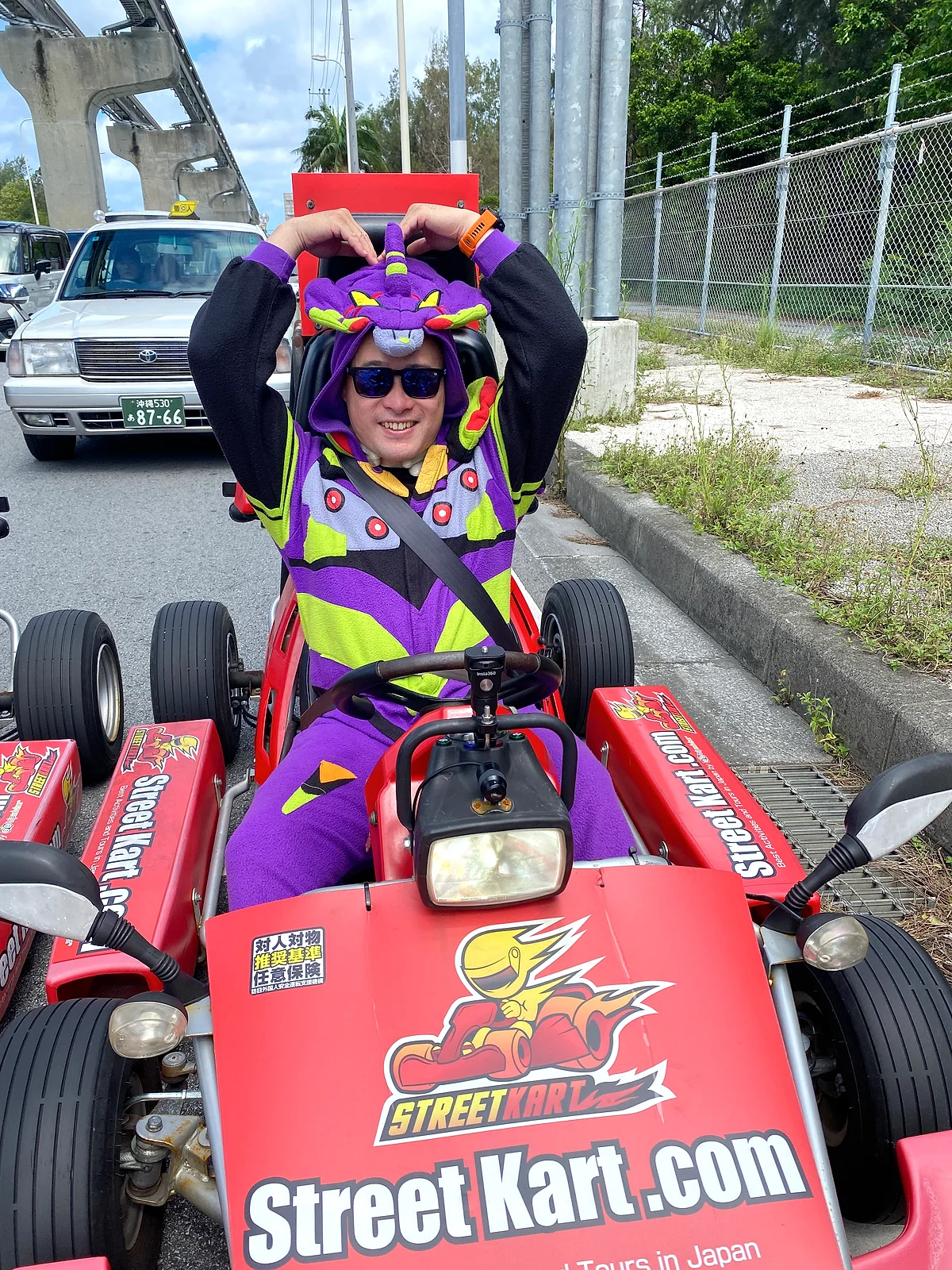
How Do Naha's Mornings and Evenings Differ? Comparing the Views from a Street Kart, and How to Coordinate Plans for a Group
Kokusai-dori is the same street in the morning and in the evening, but it sounds like two different songs.
In the morning it's a slow bossa nova. By evening, the beat picks up a little.
Naha is a city that changes its tempo with the time of day.
When you travel as a group, there's usually someone who wants to see Naha in the morning and someone who wants to see it in the evening. This article compares the two Nahas from the seat of a street kart. Along the way, it walks through how a large group can line up everyone's plans.
Morning Naha and Evening Naha: Why Does the Same Road Look Like a Different City?
Street Kart has 9 locations across Japan: 7 in Tokyo, 1 in Osaka, and 1 in Okinawa. The only one in Okinawa is in Naha. Every tour follows a guide along a route set for that location.
The places listed for the Naha routes are Kokusai-dori, central Naha around the Prefectural Office and Naha City Hall, the area around Naha Airport, and Senagajima Island with its coastal roads. Which of these you pass depends on the course.
The heart of the city, the airport, and the sea. I think having these three side by side is what makes it so easy to notice how the scenery shifts with the time of day.
The same road looks like a different city because the light, the people, and the sounds all change.
Morning light is low and whitish. Building shadows stretch long across the road. Toward evening, the light leans orange. The color of the sea and of the white walls changes bit by bit.
The flow of people is different too. In the morning, people are starting their day. In the evening, people are heading out for the night.
The same song sounds different when the air around you changes. Cities are probably the same.
So if you want to enjoy both morning Naha and evening Naha, it comes down to which time slot you pick for the tour and how you spend the time before and after it. For the latest tour times and routes, please check the official website.
Morning Naha: The City Slowly Wakes Up
Picture Kokusai-dori in the morning.
This roughly 1.6 km street is Naha's main street, known as the "Miracle Mile." From midday into the night, crowds gather at its souvenir shops and restaurants.
The morning, though, is when shop shutters are going up one by one. There are only a few people on the sidewalks, and you can see all the way down the street.
The colors of the signs. The green of the palm trees. The blue of the sky. You take them in without a crowd blocking your view.
Around the Prefectural Office, commuters start moving. For a moment you see Naha as a place where people live and work, not just a tourist spot. Getting a look at this side of the city in the middle of a trip is, I think, what makes mornings special.
Out near the airport, the planes take over the sky. Catching the morning light, they glint silver as they take off and land.
On the coastal roads, some days the water lit by the low sun looks bright and see-through. It isn't a lively morning. It's a quiet one. Taking a slow walk through that quiet is what makes a morning stroll so pleasant.
A quick note on what to wear in the morning. Wear clothes that are easy to move in, plus a layer suited to the season. In summer, a hat, sunglasses, and sunscreen are good to have. For shoes, choose a closed-toe pair. Sneakers are recommended. Low morning light can shine straight at you, so in summer your sunglasses also help you see the scenery.
If you go with a morning tour, you can plan the time around it like this.
Before the tour, have an Okinawan breakfast at C&C Breakfast on Kokusai-dori. Or browse the Okinawan produce at Makishi Public Market, on Kokusai-dori about a 10-minute walk from the shop.
After the tour, head to Yachimun-dori (Tsuboya), about a 15-minute walk from the shop. It's a street lined with pottery shops and cafés. After the excitement of the kart ride, choosing a piece of pottery is a good way to wind down.
For detailed tour start and end times, please check the official website (kart.st).
Evening Naha: The Colors of the Sea and Sky Start to Shift
In the evening, the changing colors are the main attraction.
Senagajima is a small island just south of Naha Airport. Its landmark is Senagajima Umikaji Terrace, a cluster of white buildings.
During the day, the emerald-green sea and the white walls stand out sharply against each other. As the sun gets lower, the white slowly takes on warmer tones. The sea goes from bright green to a deep blue as its tone darkens.
Around the airport, the lights of arriving and departing planes start to appear in the sky. The low rumble of the engines reaches deep into your body. It's a view that only shows up in the short stretch between day and night.
Back in town, Kokusai-dori looks nothing like it did in the morning.
Shop lights come on. The crowds swell all at once. Music drifts out of a shop somewhere. In the morning you could see straight down the street. Now it's filling up with light and people.
The morning is a quiet piece with only a few notes. The evening is the full band. Once you know this difference, Naha starts to feel like a city with a lot more depth.
Now, let me be honest about the sunset.
Sunset times shift a lot with the seasons. There's no guarantee you'll see the sunset during the tour.
If you really want to see it, one option is to head back out to Senagajima after the tour. Senagajima is about 15 minutes from the shop by car. You can enjoy Blue Seal ice cream along with the sunset.
If you're having dinner on Kokusai-dori, going over the day's photos at the Okinawan restaurant Urizun is a nice way to wrap things up.
From November into winter, the days keep getting shorter. Looking up the sunset times for your candidate dates ahead of time makes planning easier.
If you're taking a group photo on Senagajima, how about facing the sunset and turning everyone into silhouettes? Faces won't come out clearly. The gradient of the sky becomes the star instead. Once it gets dark, set your phone down on something to keep it steady and wait a few seconds. That alone cuts down on blur quite a bit.
In the evening, the air cools down about as fast as the sky changes color. Even if you spent the day in short sleeves, bring a layer. Then you can relax after the tour, even while you wait on Senagajima for the sun to go down.
Why Street Kart Lets You Take In the Changing Scenery with Your Whole Body
Here's a summary of what makes the tour itself appealing, seen through the lens of changing scenery.
First, you ride out in the open air wearing a helmet and goggles. Whether it's the white morning light or the orange evening light, it reaches your eyes straight through the goggles.
Second, the sounds and smells are close. The hum of the city. The sound of planes. The salty smell along the coast. You pick up the different feel of each time of day through your skin as well as your eyes. It's less like "seeing" the scenery and more like being bathed in it.
Third, a trained guide leads the way. You just follow the guide's back, which leaves your eyes free for the scenery.
Fourth, everyone drives their own kart. The karts are single-seaters, and passengers aren't allowed. So each person gets their own view from their own driver's seat.
After the tour, everyone compares what they saw: "The sky was pink at that point!" "No, the ocean was the best part!" That time is fun in its own way.
Fifth, on courses that pass Senagajima, a single route takes in the city, the airport, and the sea. From the area around Naha Airport with its planes coming and going, out to the sea at Senagajima, and on to the streets of Kokusai-dori. The scenery keeps switching, and those switches set the rhythm of the tour.
The tour also includes stops at photo spots. In the morning, a shot in white light. In the evening, a shot under a colored sky. Even at the same spot, a different time of day makes a different photo. When the morning group and the evening group show each other their photos, the difference between the two Nahas is clear side by side.
Sixth, the website is available in 22 languages.
As for its track record, as of November 2023, all locations combined had more than 20,000 reviews, with an average rating of 4.9 / 5.0. Those figures are from that point in time, but I think they're a useful reference.
How to Coordinate a Group's Schedule: Bringing the Morning Group and the Evening Group Together
With a large group, everyone wants to go to different places and can get up at different times. From here, let's go step by step through how to line up everyone's plans.
First, decide which Naha you want to see
If you start with dates, the discussion usually goes nowhere.
The first thing to do is ask in the group chat: "Morning Naha or evening Naha, which do you want to see?"
Knowing how everyone feels up front makes later adjustments much easier. If most people prefer mornings, plan for free time in the afternoon. If most prefer evenings, fit beaches or shopping into the daytime. The overall shape of the trip falls into place naturally.
If opinions are split, you can set aside a "morning day" and an "evening day" within the trip. Do the tour on the morning day and visit Senagajima separately in the evening. Or do the tour on the evening day and walk Kokusai-dori on another morning. That way, the whole group gets to see both Nahas.
Pick several candidate dates and get in touch early
Once you've decided on a time of day, pick two or three candidate dates.
Weekends book up quickly, so booking early is recommended. If weekdays work for you, it may be a good idea to include them as well.
For questions about group size, the surest approach is to check the official website or contact the shop once you have a rough headcount. How to book and how to get in touch are also on the official website.
When choosing candidate dates, talk about the weather as a group too. Tours go ahead as planned in light to moderate rain, and raincoats are provided free of charge. They're canceled in heavy rain or typhoons. Check the cancellation policy on the official website when you book and share it with everyone, so no one panics if it happens. Naha on a rainy day is yet another Naha, different from both the sunny morning and the evening.
Every member checks their own driver's license
Everyone should check the driver's license requirements individually, in advance.
There are license requirements for driving the karts. What you need depends on the type of license you hold and the country that issued it.
Assuming "someone else must have checked" is risky. Each person should check their own situation on the official website. For details, please see the official website.
Before the trip, get a quick "I checked" from every member. That alone takes one worry off the table on the day.
Meeting up on the day and handling language
The shop has no parking lot. Public transportation is recommended for getting there.
If you're moving as a group, set one meeting place and time and head to the shop with plenty of time to spare. If you haven't booked accommodation yet, staying nearby makes meeting up much easier. Hyatt Regency Naha Okinawa, for example, is about a 5-minute walk from the shop.
If you schedule the tour around your arrival flight on the first day, a delayed flight could mean not everyone makes it. It's safer to keep your arrival day and tour day separate.
Decide what to do about luggage, too. The shop has lockers for small items, but they aren't suited to large luggage like suitcases. If your tour falls on your checkout day, agree as a group in advance on where to leave your big bags. Pack whatever you bring on the kart into a smaller bag that fits on it.
A note on language as well. Guidance on the day of the tour is basically in English. Guidance in Japanese or other languages depends on the staff that day and isn't guaranteed.
Things go more smoothly if you pick one person in the group who's comfortable with English and ask them to relay the explanations to everyone. At check-in there's a safety briefing that covers how to operate the kart, the route, and things to watch out for. The relay person passes this along to the rest of the group. If some members aren't confident in English and you're worried, contact the shop in advance to talk it over.
Split up on purpose before and after the tour
The bigger the group, the more tiring it gets to do everything together.
So try splitting up once, before or after the tour.
After a morning tour, those who want to see the market can go to Makishi Public Market, and those who love pottery can head to Yachimun-dori. Everyone goes their own way, then meets up again on Kokusai-dori.
Before an evening tour, those who want to enjoy the ocean can hit the beach in the morning, then shower and change before meeting up. Just don't show up in beach sandals. Open-toed shoes, heels, skirts, and dresses are best avoided. Pack a pair of sneakers with your change of clothes.
There's fun in being together the whole time. There's also fun in drifting apart a bit and coming back together. Put the tour, with everyone together, right in the middle. That becomes the heart of the trip.
Turning the Changing Scenery into a Shared Group Memory
Naha in the white morning light, leaving a quiet Kokusai-dori behind and heading out under the airport sky.
Naha in the orange evening light, with the white walls of Senagajima and a sea that grows deeper in color.
Whichever you choose, you'll meet a different face of the same city.
And if you're traveling as a group, you get to see it together, then talk afterward about what each of you saw from your own driver's seat.
Start by asking in the group chat: "Morning or evening?" Once you've settled on candidate dates, check the tour details on the official website. If you're thinking about a weekend, get in touch early.
Some time after the trip is over, what suddenly comes back to you will probably be the color of the light that day.
This article was originally written in Japanese and translated using AI. Some expressions may read unnaturally, and we appreciate your understanding. For the most accurate and up-to-date information, please refer to the official site at kart.st.
Street Kart is not affiliated with Nintendo or the Mario Kart series in any way. We do not provide costumes of Nintendo characters, and such costumes may not be worn during tours even if brought by participants.